historical linguistics
-
Homer’s ABCs

Or: Why don’t people in the Iliad and Odyssey write anything down? Sing, goddess, of how Homer is all the rage right now. My timelines have become streams of Nolan-inspired analyses, hot takes and fun facts. While there are many wrathful (and often untenable) criticisms and some complaints of Homeric fatigue to wade through, I… Continue reading
-
Ex- a Weird Old Word Order -ploring

Once, in my halcyon days of doctoral studies, I gave an informal presentation that ended not with the typical slide “any questions?”, but rather “any answers?”. The talk’s topic fitted into my overall research into the word order of ancient Indo-European languages. My task was to acquire, present, evaluate and compare the available evidence, upon… Continue reading
-
The Inglish Language
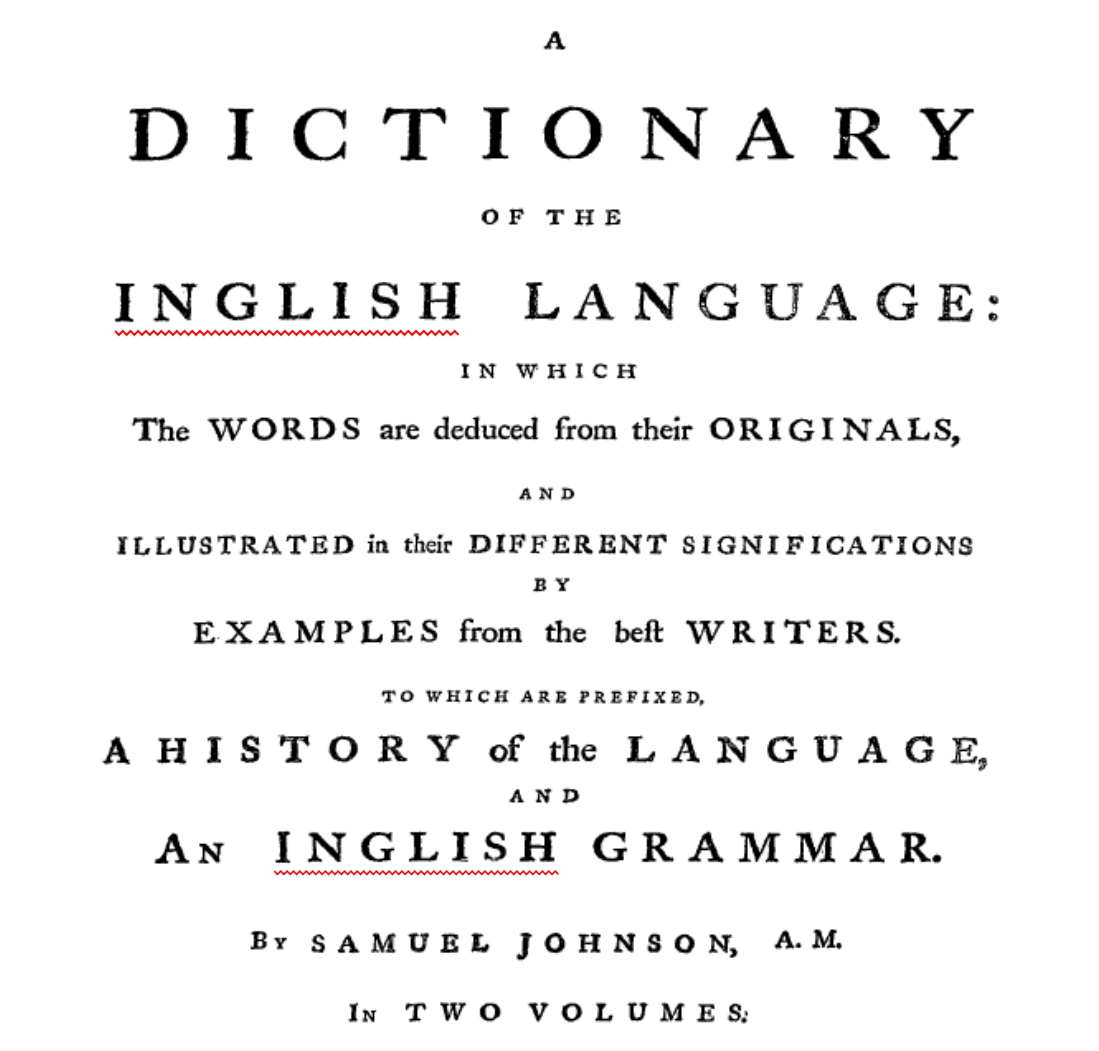
It seems all too appropriate that a language infamous for its quirks of spelling should display a quirk of spelling in its very name. The word English would reasonably guide total newcomers to pronounce it with a short E, like the one typically to be heard in pen. Instead, their ears are due to be… Continue reading
-
Meet English’s Newest Consonant
As stable as they may seem, every sound of every spoken language, at some point in the past, didn’t exist. The incessant shifting of speech involves the innovation of sounds, when either new ones are born or old ones transform. Consequently, within the sounds that a particular spoken language (such as Modern English) makes use… Continue reading
-
The Etymological Problem with Apples

I remain resolute in the belief that ordinary, ten-a-penny words are far more interesting than the rare jewels and prized flowers of any language’s lexicon. Miss me with your petrichor and antidisestablishmentarianism; I’d much rather tell you about apple. This isn’t my contrarian streak speaking. I take genuine joy in the fact that tracing the etymology of… Continue reading
-
The Armenian Who Learned Greek in Ancient Egypt

Or: Why my (probably) favourite historical document is a unique Armenian text without a word of Armenian. Centuries before the translation apps and pocketable phrasebooks of today, people who found themselves far from home made do with ink and papyrus. For reasons of pure linguistico-historical nerdery and joy, I’d like to introduce you to a… Continue reading
-
An Unexpected ‘Indian’ Language in the Middle East

Delighted and motivated by the positive response to my recent article, Greek, the Asian and African Language, my mind has been occupied by an eagerness to share another example of historical languages turning up where we don’t expect them to be. That post and this one are united by an appreciation of how interconnected the ancient… Continue reading
-
A Voice for the Voiceless: English’s Lost Consonants

In September this year, Catherine Clarke, professor at the Institute of Historical Research, published A History of England in 25 Poems. This chronological hike through England’s history via verses that its people have left behind was released to great acclaim – and no wonder, when the book manages to be comfortable and accessible, yet also… Continue reading
-
New Article: ‘Wackernagel’s Law in Vedic and Old Irish’
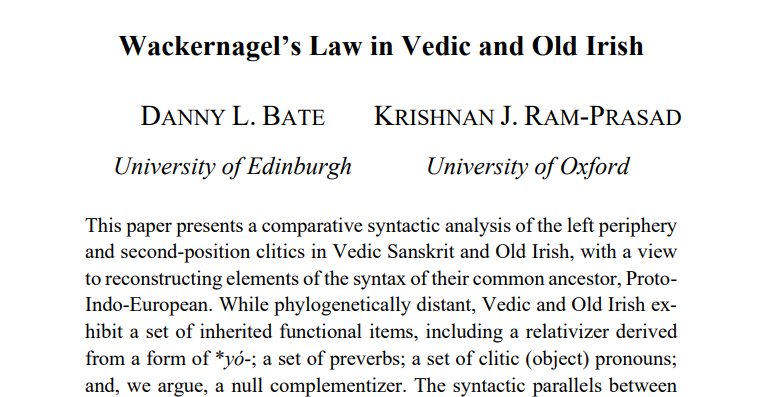
By a happy twist of fate, January 2025, just like January 2024, has allowed me to announce a new academic publication! This time, it’s Wackernagel’s Law in Vedic and Old Irish, a paper co-authored with my brilliant colleague and dear friend Krishnan Ram-Prasad. The paper has been included among the proceedings for the thirty-fourth annual… Continue reading
-
Relics in Roman Writing

Reading time: 5 minutes When we look at impressive Latin inscriptions from the days of Rome, there is something very fixed and familiar about the look of the letters. We recognise the roughly square-shaped capital letters like A, B and C as our own, and they more or less serve the same functions now as… Continue reading