English
-
Sure Sugar

Or: Wait, shouldn’t those two English words be spelled with SH? Despite its reputation and the infamous evidence to the contrary, I’m committed to demonstrating how regular English spelling actually is. Yet words like sugar and sure, I admit, mock that vocation. In being pronounced as if they began with SH, the pair require me… Continue reading
-
The Inglish Language
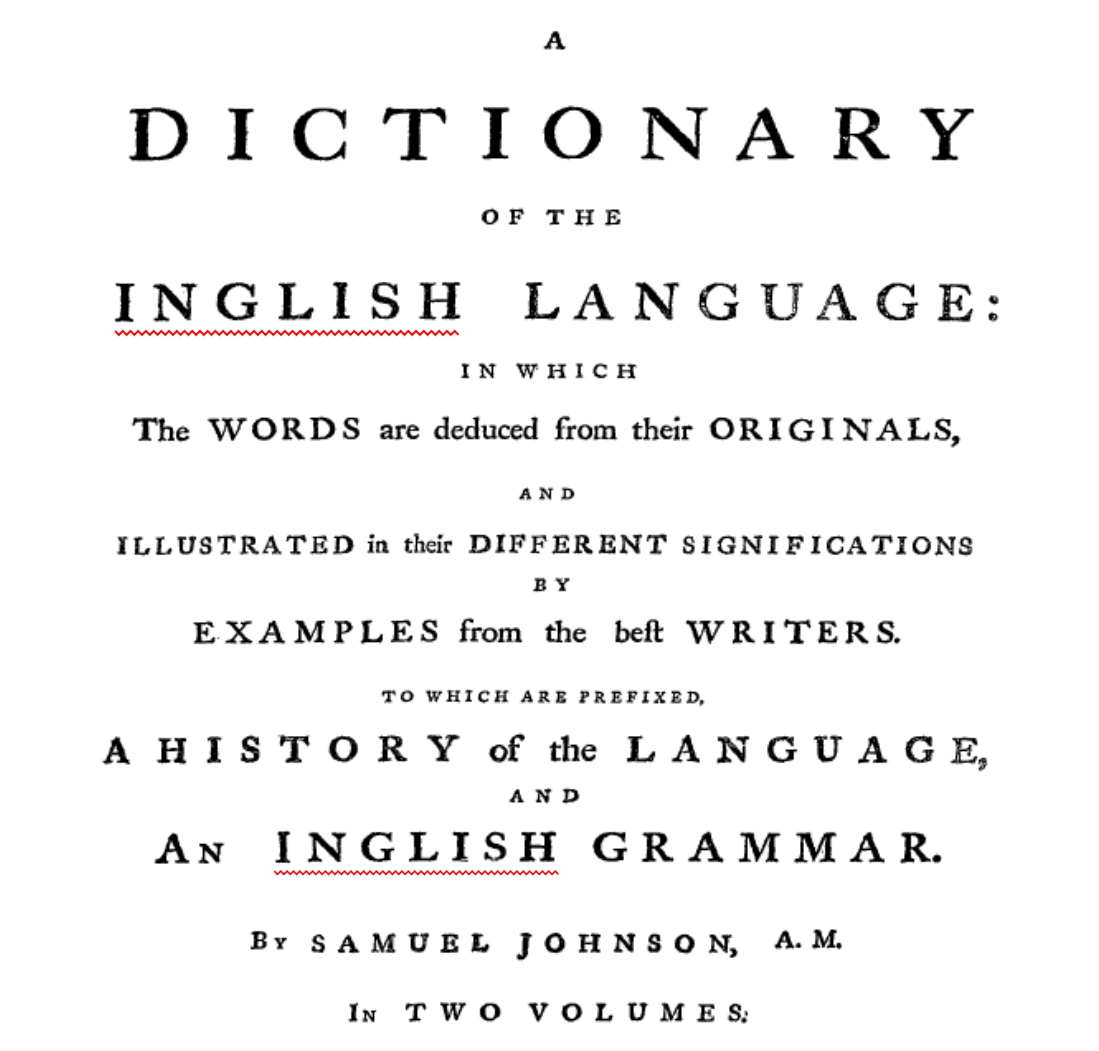
It seems all too appropriate that a language infamous for its quirks of spelling should display a quirk of spelling in its very name. The word English would reasonably guide total newcomers to pronounce it with a short E, like the one typically to be heard in pen. Instead, their ears are due to be… Continue reading
-
Meet English’s Newest Consonant

As stable as they may seem, every sound of every spoken language, at some point in the past, didn’t exist. The incessant shifting of speech involves the innovation of sounds, when either new ones are born or old ones transform. Consequently, within the sounds that a particular spoken language (such as Modern English) makes use… Continue reading
-
The Etymological Problem with Apples

I remain resolute in the belief that ordinary, ten-a-penny words are far more interesting than the rare jewels and prized flowers of any language’s lexicon. Miss me with your petrichor and antidisestablishmentarianism; I’d much rather tell you about apple. This isn’t my contrarian streak speaking. I take genuine joy in the fact that tracing the etymology of… Continue reading
-
The Armenian Who Learned Greek in Ancient Egypt

Or: Why my (probably) favourite historical document is a unique Armenian text without a word of Armenian. Centuries before the translation apps and pocketable phrasebooks of today, people who found themselves far from home made do with ink and papyrus. For reasons of pure linguistico-historical nerdery and joy, I’d like to introduce you to a… Continue reading
-
A Love that Lasts Six Thousand Years

“… Love is not love Which alters when it alteration finds, Or bends with the remover to remove. O no! it is an ever-fixed mark That looks on tempests and is never shaken.” (William Shakespeare, Sonnet 116) February 14th has come round again, and love is in the air! ‘It was different in my day,’… Continue reading
-
Cool Etymology: Chilled Jelly and Cold Gelato

In previous years, I’ve seized on the annual holiday of Christmas as inspiration for a December article. For this year, though, I fancy a foray into the weather conditions associated with that holiday: that is, the cold. Christmas imagery is inseparable from low temperatures, what with all its snow, reindeer, and jolly gentlemen in fur-lined… Continue reading
-
A Voice for the Voiceless: English’s Lost Consonants

In September this year, Catherine Clarke, professor at the Institute of Historical Research, published A History of England in 25 Poems. This chronological hike through England’s history via verses that its people have left behind was released to great acclaim – and no wonder, when the book manages to be comfortable and accessible, yet also… Continue reading
-
‘Why Q Needs U’ cover reveal!

Friends, linguists, beloved subscribers, lend me your eyes! My new book Why Q Needs U has a cover. Now, you shouldn’t judge a book by its cover, but you can judge a cover, and this one is looking good. This reveal also comes with a limited-time discount… A lot of thought and emails have gone… Continue reading
-
A CHRISTMAS Full of Etymology
Reading time: 5 minutes It’s December now, the month when the calendar helpfully provides me with a topic for the monthly article. So, here’s a short and sweet linguistic post with a festive theme: nine Christmas-related words that I think have interesting etymologies, one for each of the nine letters of the word Christmas. I… Continue reading