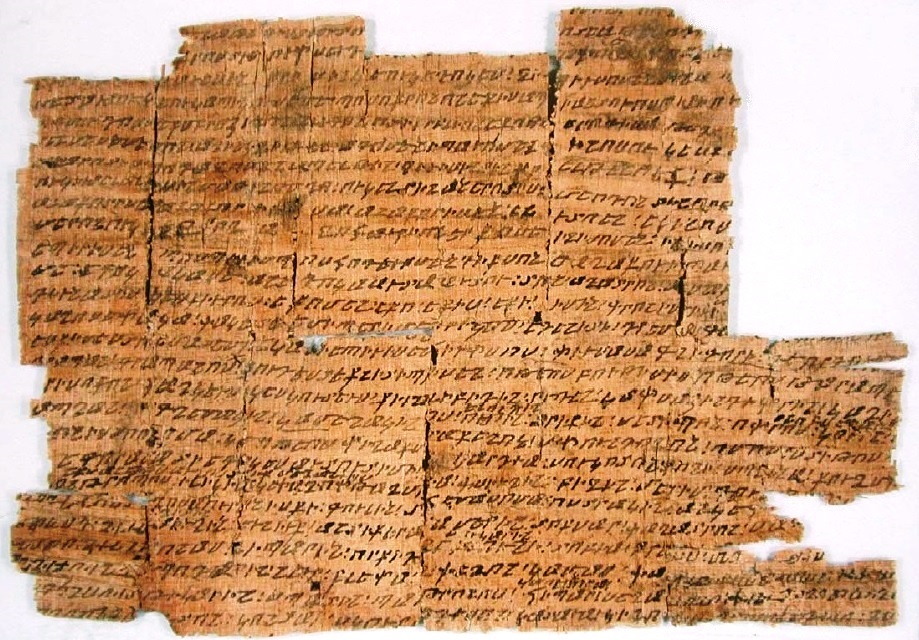
Or: Why my (probably) favourite historical document is a unique Armenian text without a word of Armenian. Centuries before the translation apps and pocketable phrasebooks of today, people who found themselves far from home made do with ink and papyrus. For reasons of pure linguistico-historical nerdery and joy, I’d like to introduce you to aContinue reading “The Armenian Who Learned Greek in Ancient Egypt”
Tag Archives: historical linguistics
An Unexpected ‘Indian’ Language in the Middle East
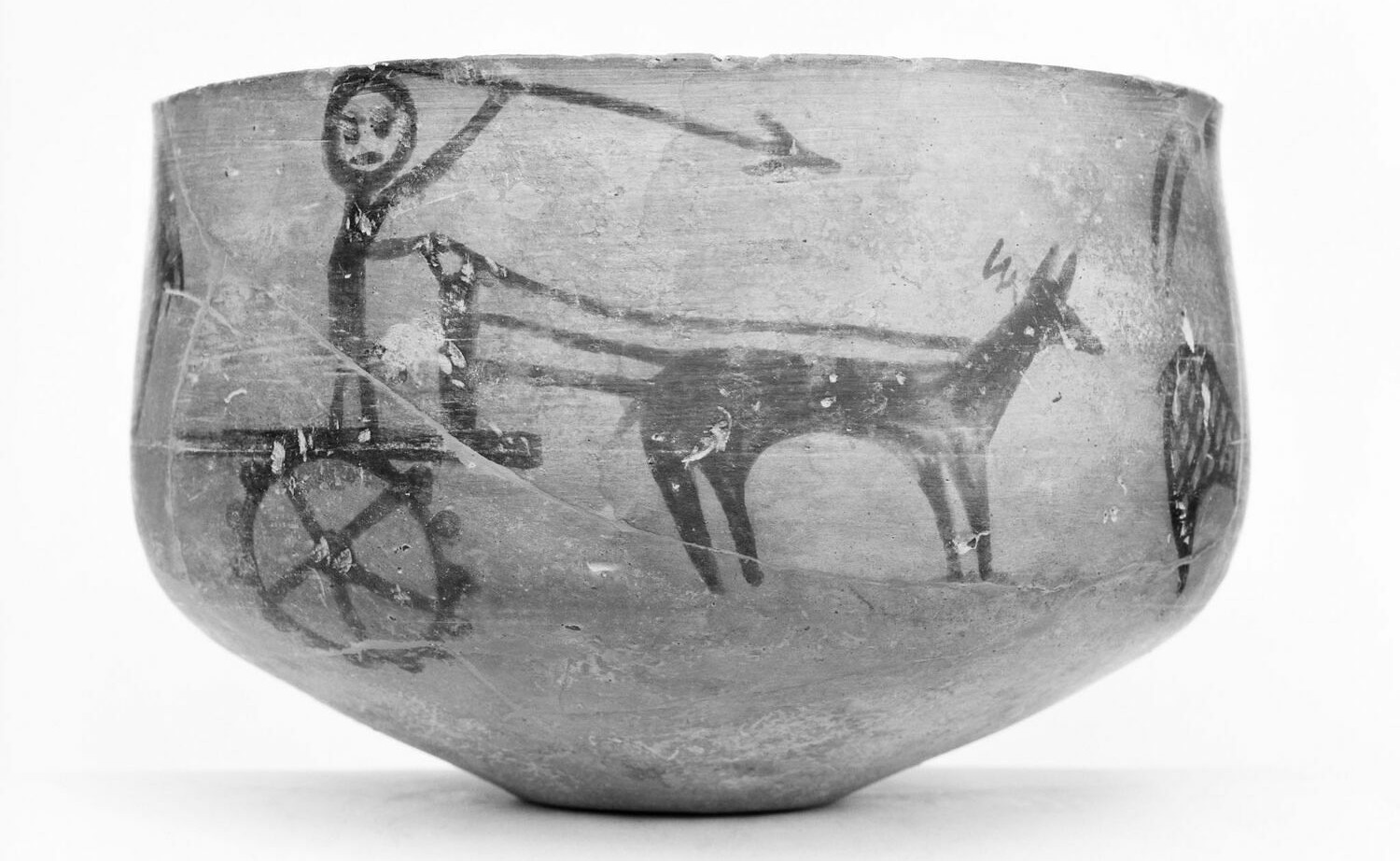
Delighted and motivated by the positive response to my recent article, Greek, the Asian and African Language, my mind has been occupied by an eagerness to share another example of historical languages turning up where we don’t expect them to be. That post and this one are united by an appreciation of how interconnected the ancientContinue reading “An Unexpected ‘Indian’ Language in the Middle East”
A Voice for the Voiceless: English’s Lost Consonants
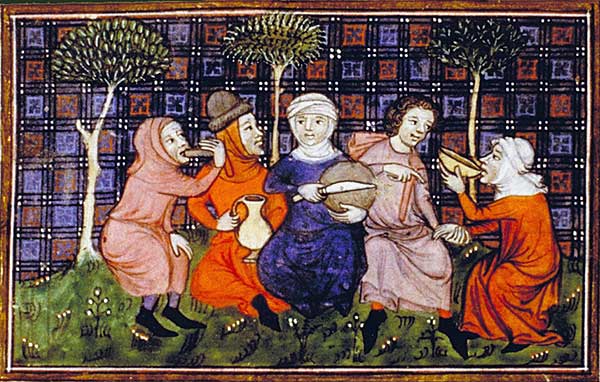
In September this year, Catherine Clarke, professor at the Institute of Historical Research, published A History of England in 25 Poems. This chronological hike through England’s history via verses that its people have left behind was released to great acclaim – and no wonder, when the book manages to be comfortable and accessible, yet alsoContinue reading “A Voice for the Voiceless: English’s Lost Consonants”
New Article: ‘Wackernagel’s Law in Vedic and Old Irish’
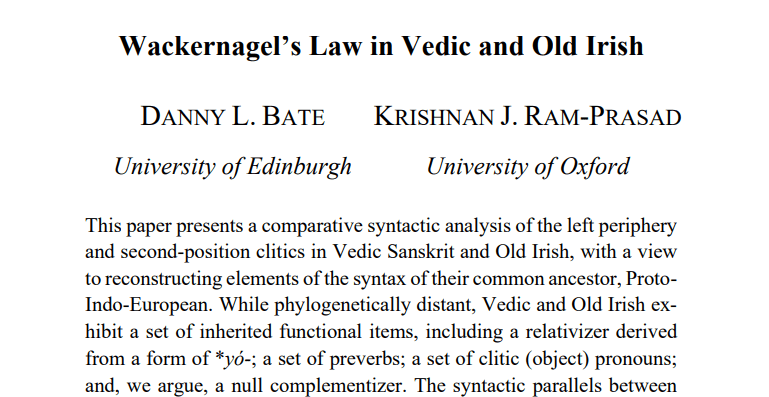
By a happy twist of fate, January 2025, just like January 2024, has allowed me to announce a new academic publication! This time, it’s Wackernagel’s Law in Vedic and Old Irish, a paper co-authored with my brilliant colleague and dear friend Krishnan Ram-Prasad. The paper has been included among the proceedings for the thirty-fourth annualContinue reading “New Article: ‘Wackernagel’s Law in Vedic and Old Irish’”
Relics in Roman Writing
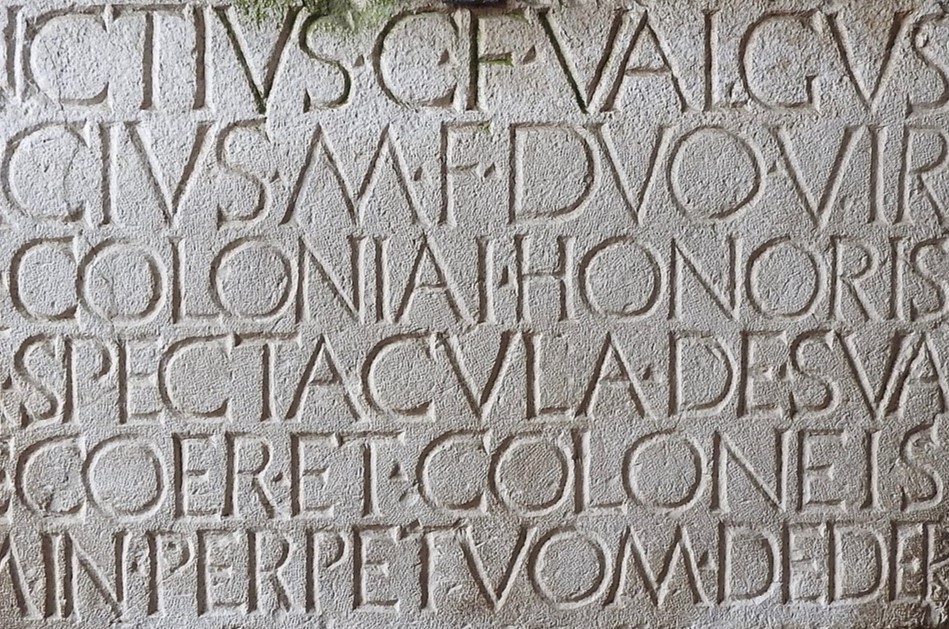
Reading time: 5 minutes When we look at impressive Latin inscriptions from the days of Rome, there is something very fixed and familiar about the look of the letters. We recognise the roughly square-shaped capital letters like A, B and C as our own, and they more or less serve the same functions now asContinue reading “Relics in Roman Writing”
The Path of ‘Path’

Reading time: 5-10 minutes For this month, I’d like to shine an etymological spotlight on a humble bit of English vocabulary, which, at first glance, you wouldn’t give a second thought. As this post’s title implies, the everyday word in question is path. What, I hear you cry, is so special about path? It’s aContinue reading “The Path of ‘Path’”
Humble Thimbles and Thor’s Thunder

Reading time: 5-10 minutes For this month, I’d like to highlight a phonological phenomenon that should be part of the conceptual toolkit of all etymology fans. It’s something that’s happened in the history of English, and in languages that have gone on to influence English. Awareness of this change can therefore clarify and connect allContinue reading “Humble Thimbles and Thor’s Thunder”
The Fates of the Dual

The Story of Indo-European‘s (Mostly) Lost Number Reading time: 10 minutes Introduction One book, many books. One cat, many cats. One woman, many women. One sheep, many… well, also sheep. In Modern English, the grammatical options for nouns are limted to two. A given noun can be singular, referring to one individual thing, or plural,Continue reading “The Fates of the Dual”
The Reichenau Glossary and the Birth of French

Reading time: 10 minutes Now, I must confess, I have been somewhat preoccupied for the past two months, and so haven’t dedicated time to this site. The jump into the world of podcasting has taken a lot of effort, and yet the website hasn’t been far from my thoughts. So, for this October, I’m gettingContinue reading “The Reichenau Glossary and the Birth of French”
Five Antiquities of English

Reading time: 10-15 minutes To listen along in an audio format, just click here: IT’S WELL KNOWN that English has undergone many significant changes down the centuries. Events like the Norman Conquest have drastically altered the shape of the language, influencing words and sounds so much that a new kind of English was born. YetContinue reading “Five Antiquities of English”
 Danny L. Bate