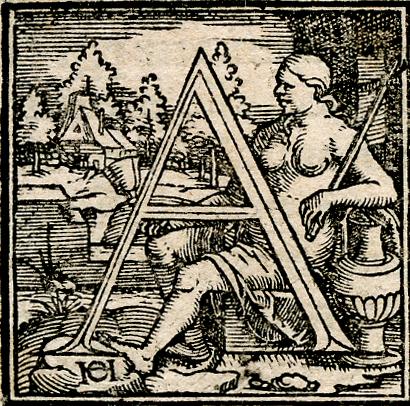
There’s a certain air of femininity around the letter A. For one reason, it brings a great number of modern female first names to a close. A sample of famous names, especially if skewed towards the West, will typically include a fair few examples. Among the female winners of a Nobel Prize, we find Claudia, Bertha,Continue reading “Monica, Erica, Rita, Tina: Why do so many women’s names end in A?”
Tag Archives: Latin
Cool Etymology: Chilled Jelly and Cold Gelato

In previous years, I’ve seized on the annual holiday of Christmas as inspiration for a December article. For this year, though, I fancy a foray into the weather conditions associated with that holiday: that is, the cold. Christmas imagery is inseparable from low temperatures, what with all its snow, reindeer, and jolly gentlemen in fur-linedContinue reading “Cool Etymology: Chilled Jelly and Cold Gelato”
Sázava and the Consolidation of the West

Central-Bohemian towns with 4,000 inhabitants rarely star as the headline destinations of travel vloggers and guidebooks to the Czech Republic. Prague, Brno, Karlovy Vary, Plzeň, Olomouc, Český Krumlov – these are where I’d personally send a first-time tourist. The town of Sázava, meanwhile, lying twenty miles southeast of Prague, I would reserve for the history-desperateContinue reading “Sázava and the Consolidation of the West”
Reflections of Trieste

Like an insufferable fin-de-siècle socialite, I’m writing this on my honeymoon, a three-stop holiday that naturally never once ventures outside the old borders of the Austrian Empire.¹ As any self-respecting new husband should, it’s giving me the time to reflect on the two dearest things in life: a beautiful wife, and language history. No otherContinue reading “Reflections of Trieste”
Relics in Roman Writing
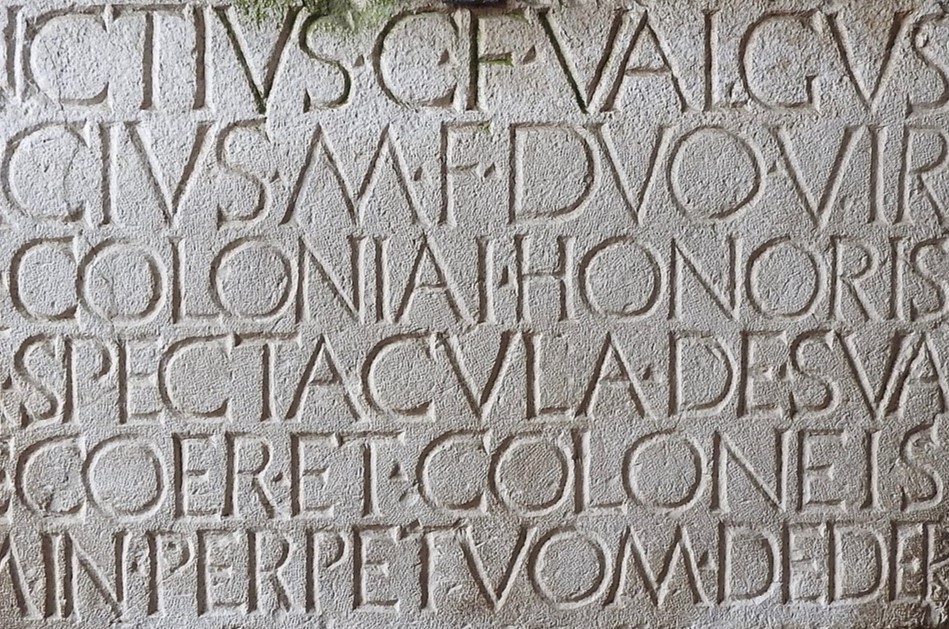
Reading time: 5 minutes When we look at impressive Latin inscriptions from the days of Rome, there is something very fixed and familiar about the look of the letters. We recognise the roughly square-shaped capital letters like A, B and C as our own, and they more or less serve the same functions now asContinue reading “Relics in Roman Writing”
Verba Bohemica: The Oldest Latin Words in Czech

Reading time: 5-10 minutes For this month, I’d like to revisit two languages very close to my heart: Latin and Czech. Besides English, they’re the two languages I tend to spend the most time with. Specifically, this is a simple post about how the former has historically affected the latter. As a European language, it’sContinue reading “Verba Bohemica: The Oldest Latin Words in Czech”
Spending Pounds and Pensively Pondering: pend- in English

Reading time: 5-10 minutes Just a simple piece from me for this month, in which I’d like to shine a spotlight on a Latin root that’s been remarkably successful in English vocabulary. It all goes back to hanging things. In Latin, we find the very similar verbs pendere and pendēre. They’re close not only inContinue reading “Spending Pounds and Pensively Pondering: pend- in English”
Streets Ahead: When Roman Roads Met Old English

Reading time: 5 minutes (With my apologies to subscribers for the second email, following an accidental premature publication) I’m very keen to share a fun linguistic adventure that I found myself on this week, as I dug down into the history of the humble English word street. It all began with a Patreon post byContinue reading “Streets Ahead: When Roman Roads Met Old English”
The Reichenau Glossary and the Birth of French

Reading time: 10 minutes Now, I must confess, I have been somewhat preoccupied for the past two months, and so haven’t dedicated time to this site. The jump into the world of podcasting has taken a lot of effort, and yet the website hasn’t been far from my thoughts. So, for this October, I’m gettingContinue reading “The Reichenau Glossary and the Birth of French”
The Gaulish in English, in 10 Words
Reading time: 10-15 minutes To hear me speaking in my not-quite-best Latin, you can listen along here: IF you know a thing or two about Roman history, you will have come across the Gauls. They loom large in the story of Rome’s rise to dominance, both as their aggressor and as victims of their conquests.Continue reading “The Gaulish in English, in 10 Words”
 Danny L. Bate