
Or: Why my (probably) favourite historical document is a unique Armenian text without a word of Armenian. Centuries before the translation apps and pocketable phrasebooks of today, people who found themselves far from home made do with ink and papyrus. For reasons of pure linguistico-historical nerdery and joy, I’d like to introduce you to aContinue reading “The Armenian Who Learned Greek in Ancient Egypt”
Tag Archives: linguistics
Vltava, Sázava, Mumlava: A Mumble of Voices Almost Lost
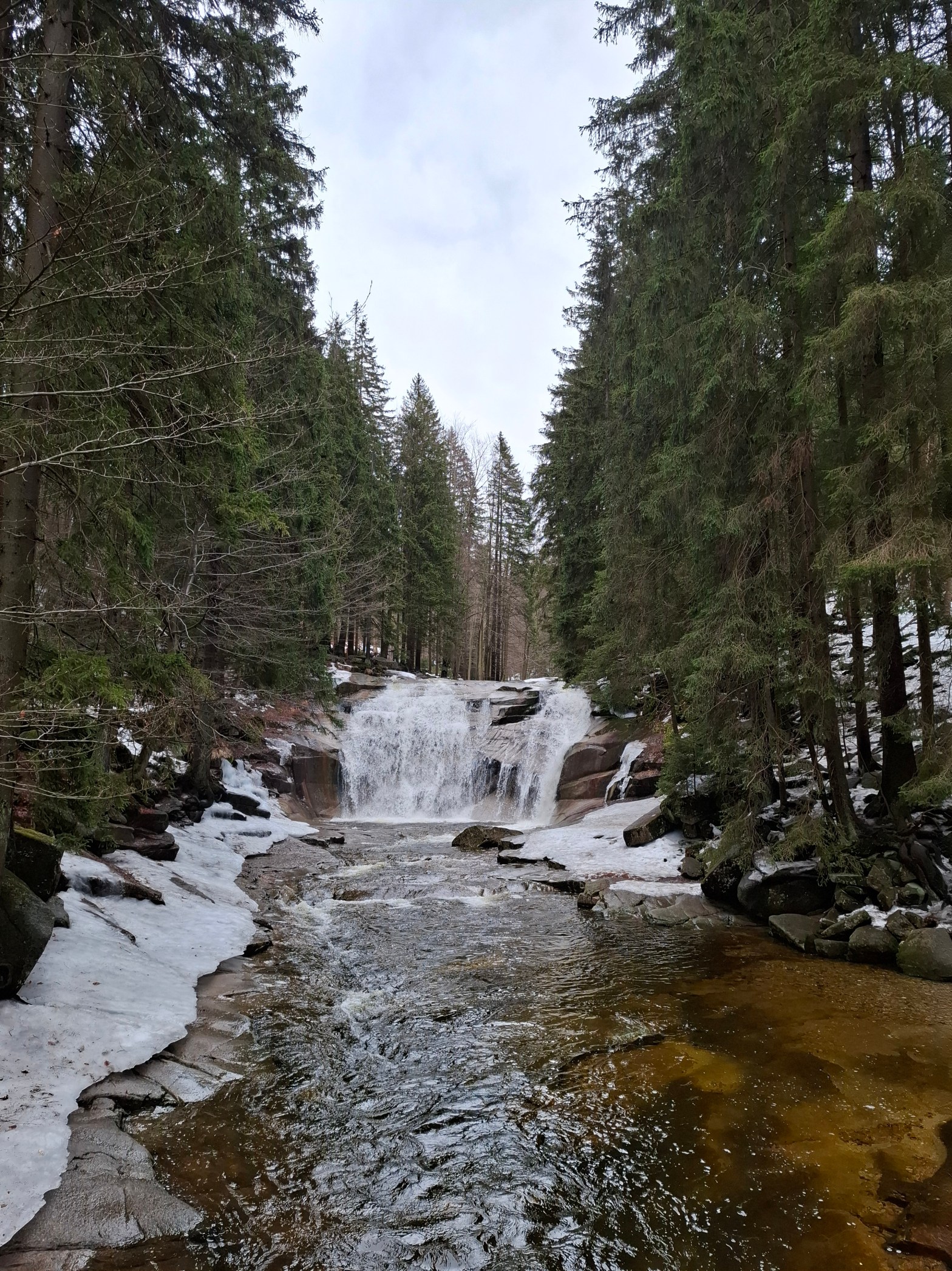
Local rivers, specifically just one bit of them, have had me reflecting on lost language and the flow of time again. No one will be surprised by this. I recently descended from the heights of an enjoyable weekend in Krkonoše, a very hilly national park in the Czech Republic. Tucked up between two angles ofContinue reading “Vltava, Sázava, Mumlava: A Mumble of Voices Almost Lost”
A Love that Lasts Six Thousand Years
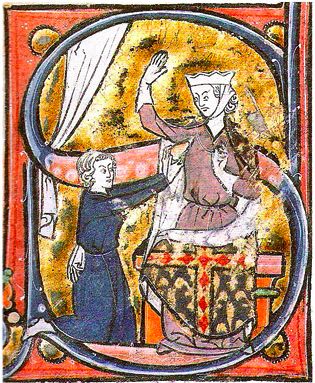
“… Love is not love Which alters when it alteration finds, Or bends with the remover to remove. O no! it is an ever-fixed mark That looks on tempests and is never shaken.” (William Shakespeare, Sonnet 116) February 14th has come round again, and love is in the air! ‘It was different in my day,’Continue reading “A Love that Lasts Six Thousand Years”
Greek, the Asian and African Language

Just as the borders of Europe are geographically, politically and socially fuzzy, so too are its linguistic edges. Whatever lines of demarcation we care to draw, the many flavours of speech to be heard in Europe flow over those lines like the air of which they’re made. Consequently, a label like ‘a European language’ isContinue reading “Greek, the Asian and African Language”
Cool Etymology: Chilled Jelly and Cold Gelato

In previous years, I’ve seized on the annual holiday of Christmas as inspiration for a December article. For this year, though, I fancy a foray into the weather conditions associated with that holiday: that is, the cold. Christmas imagery is inseparable from low temperatures, what with all its snow, reindeer, and jolly gentlemen in fur-linedContinue reading “Cool Etymology: Chilled Jelly and Cold Gelato”
A Voice for the Voiceless: English’s Lost Consonants

In September this year, Catherine Clarke, professor at the Institute of Historical Research, published A History of England in 25 Poems. This chronological hike through England’s history via verses that its people have left behind was released to great acclaim – and no wonder, when the book manages to be comfortable and accessible, yet alsoContinue reading “A Voice for the Voiceless: English’s Lost Consonants”
‘Why Q Needs U’ – Out Today!
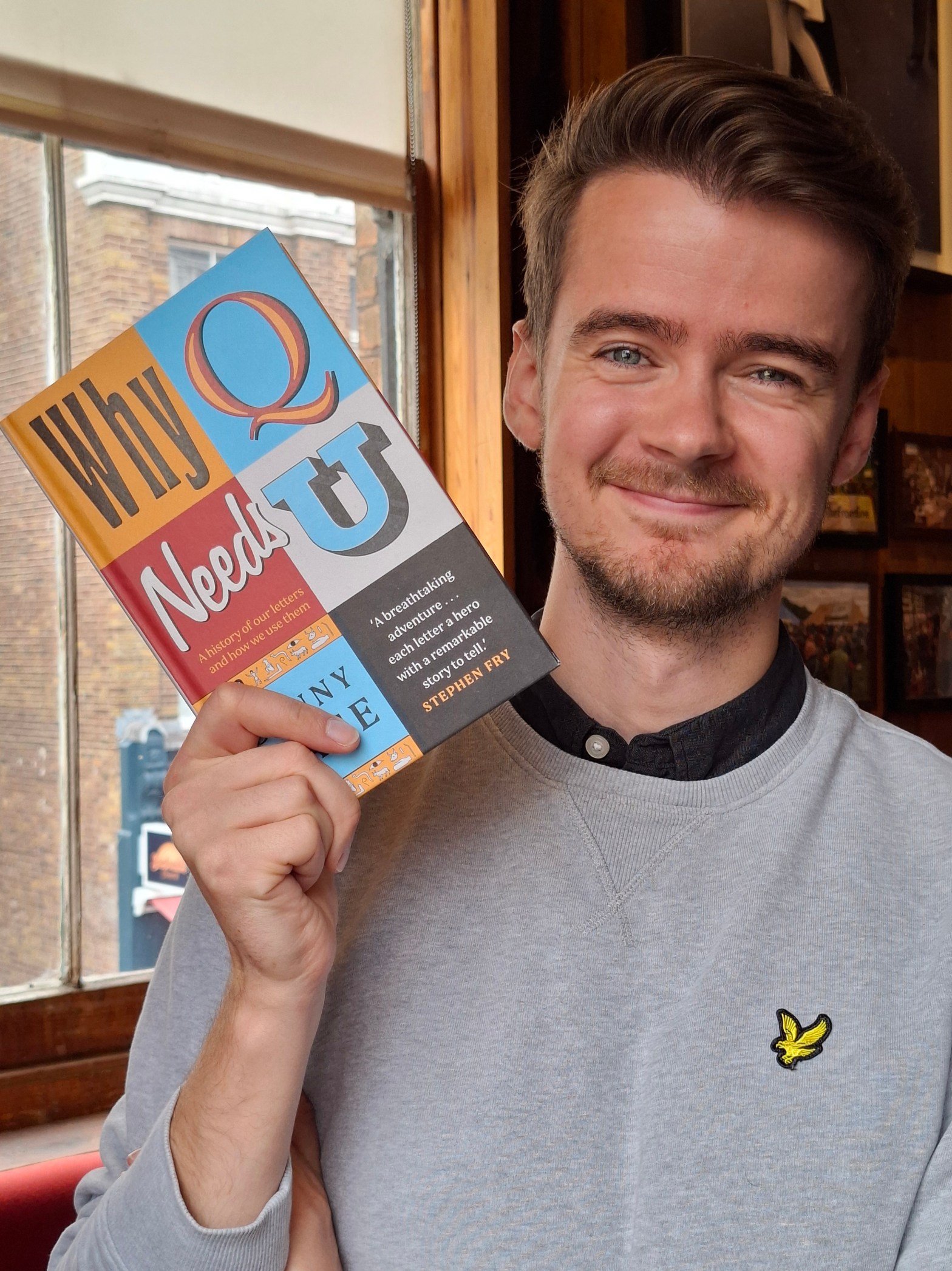
The long-awaited day (awaited by me at least) is here, as October 2nd is the publication day of my new book Why Q Needs U: A history of our letters and how we use them! Find it here: https://geni.us/WhyQNeedsU Published in the UK by Blink/Bonnier, it’s now available to find in British bookshops – asContinue reading “‘Why Q Needs U’ – Out Today!”
Reflections of Trieste

Like an insufferable fin-de-siècle socialite, I’m writing this on my honeymoon, a three-stop holiday that naturally never once ventures outside the old borders of the Austrian Empire.¹ As any self-respecting new husband should, it’s giving me the time to reflect on the two dearest things in life: a beautiful wife, and language history. No otherContinue reading “Reflections of Trieste”
You Know More Finnish Than You Think

Linguistics illuminates the linguistically obscure – or so I’ve always thought. It’s a common theme of my online output that a little bit of historical linguistics goes a long way, making helpful connections and breaking down psychological barriers. This theme was present in two old posts of mine that used etymology to elucidate two OldContinue reading “You Know More Finnish Than You Think”
‘Why Q Needs U’ cover reveal!

Friends, linguists, beloved subscribers, lend me your eyes! My new book Why Q Needs U has a cover. Now, you shouldn’t judge a book by its cover, but you can judge a cover, and this one is looking good. This reveal also comes with a limited-time discount… A lot of thought and emails have goneContinue reading “‘Why Q Needs U’ cover reveal!”
 Danny L. Bate