
Reading time: quite a while Having dedicated over four years of my life to the subject, I have one or two thoughts about the word order of Proto-Indo-European. Somebody somewhere had to have them. This reconstructed language – the ‘lost’ common ancestor proposed to explain the countless similarities across the Indo-European languages – has nowadaysContinue reading “PIE was not SOV”
Author Archives: dannylbate
New Article: ‘Wackernagel’s Law in Vedic and Old Irish’
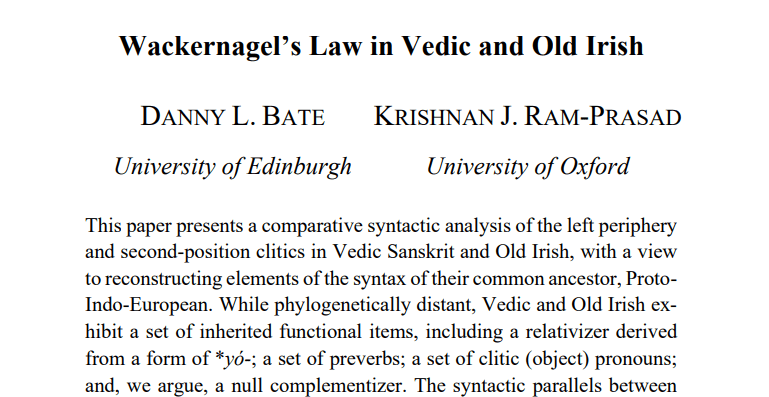
By a happy twist of fate, January 2025, just like January 2024, has allowed me to announce a new academic publication! This time, it’s Wackernagel’s Law in Vedic and Old Irish, a paper co-authored with my brilliant colleague and dear friend Krishnan Ram-Prasad. The paper has been included among the proceedings for the thirty-fourth annualContinue reading “New Article: ‘Wackernagel’s Law in Vedic and Old Irish’”
A CHRISTMAS Full of Etymology

Reading time: 5 minutes It’s December now, the month when the calendar helpfully provides me with a topic for the monthly article. So, here’s a short and sweet linguistic post with a festive theme: nine Christmas-related words that I think have interesting etymologies, one for each of the nine letters of the word Christmas. IContinue reading “A CHRISTMAS Full of Etymology”
Oneteen, twoteen? The origins of ‘eleven’ and ‘twelve’
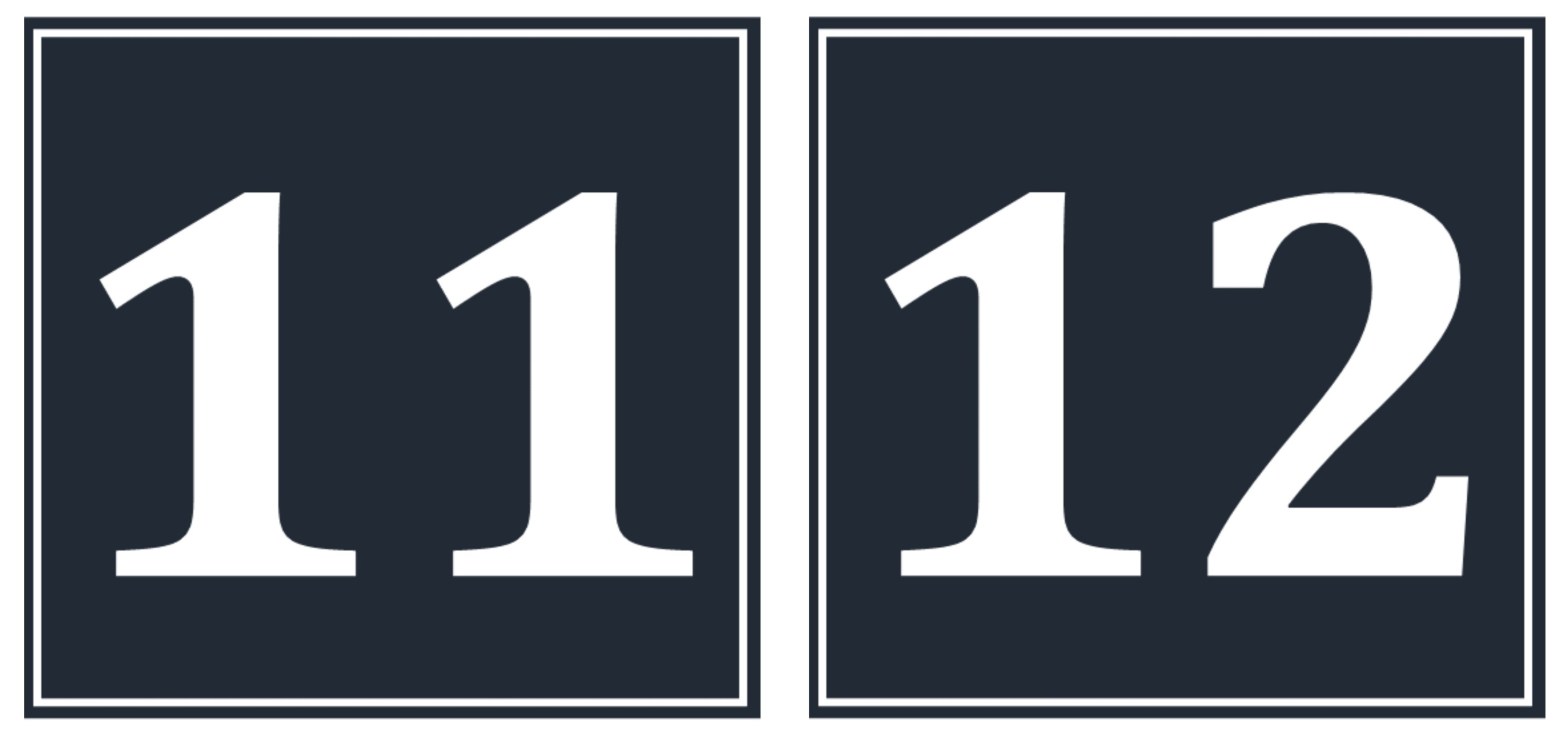
Reading time: 5 minutes November, at time of writing, is ticking out its final few hours, and with them, the eleventh month of 2024 is giving way to the twelfth. Aside from the awkward mismatch in the months’ etymology (November and December were originally the ninth and tenth months in the Roman calendar), the numbersContinue reading “Oneteen, twoteen? The origins of ‘eleven’ and ‘twelve’”
Relics in Roman Writing
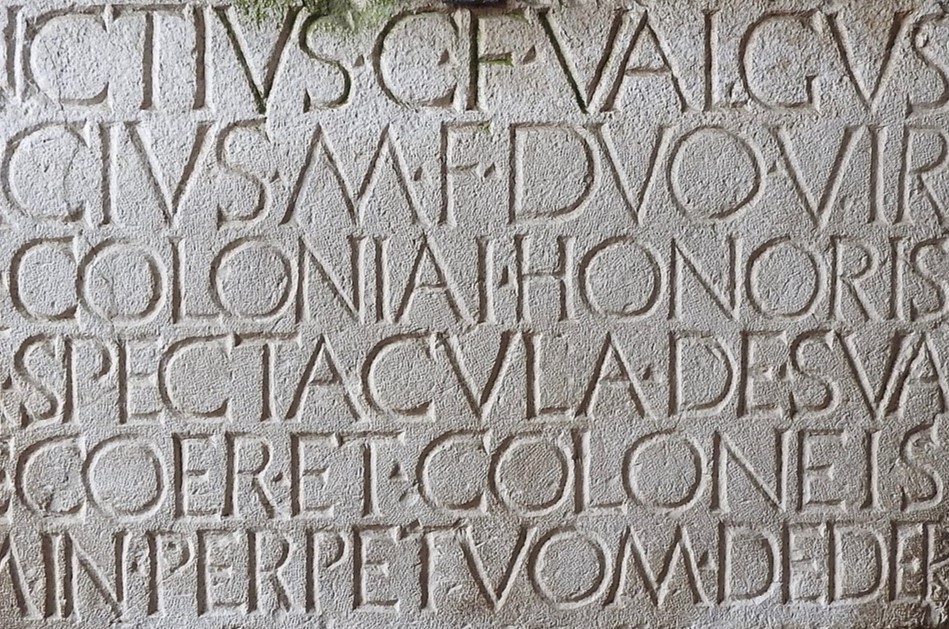
Reading time: 5 minutes When we look at impressive Latin inscriptions from the days of Rome, there is something very fixed and familiar about the look of the letters. We recognise the roughly square-shaped capital letters like A, B and C as our own, and they more or less serve the same functions now asContinue reading “Relics in Roman Writing”
All We Hear is Radio Praha (Unexpected Part 2)

A personal update from me: September has brought it a change in occupation for me. This change has been a long time coming, and was a milestone on the road of life that seemed very distant when I was (totally unexpectedly) recommended for the job back in March. Now September is here, and that meansContinue reading “All We Hear is Radio Praha (Unexpected Part 2)”
Verba Bohemica: The Oldest Latin Words in Czech

Reading time: 5-10 minutes For this month, I’d like to revisit two languages very close to my heart: Latin and Czech. Besides English, they’re the two languages I tend to spend the most time with. Specifically, this is a simple post about how the former has historically affected the latter. As a European language, it’sContinue reading “Verba Bohemica: The Oldest Latin Words in Czech”
The Path of ‘Path’

Reading time: 5-10 minutes For this month, I’d like to shine an etymological spotlight on a humble bit of English vocabulary, which, at first glance, you wouldn’t give a second thought. As this post’s title implies, the everyday word in question is path. What, I hear you cry, is so special about path? It’s aContinue reading “The Path of ‘Path’”
Prehistoric Syntax and Public Linguistics with Jackson Crawford

A personal bit of news: a return to rambling enthusiastically on YouTube! I’ve another rare appearance in visual format, as I was delighted to be invited back by Dr Jackson Crawford for a second interview with him and his Patreon supporters. Last time, it was all about etymology; this time, I got to talk veryContinue reading “Prehistoric Syntax and Public Linguistics with Jackson Crawford”
Spending Pounds and Pensively Pondering: pend- in English

Reading time: 5-10 minutes Just a simple piece from me for this month, in which I’d like to shine a spotlight on a Latin root that’s been remarkably successful in English vocabulary. It all goes back to hanging things. In Latin, we find the very similar verbs pendere and pendēre. They’re close not only inContinue reading “Spending Pounds and Pensively Pondering: pend- in English”
 Danny L. Bate