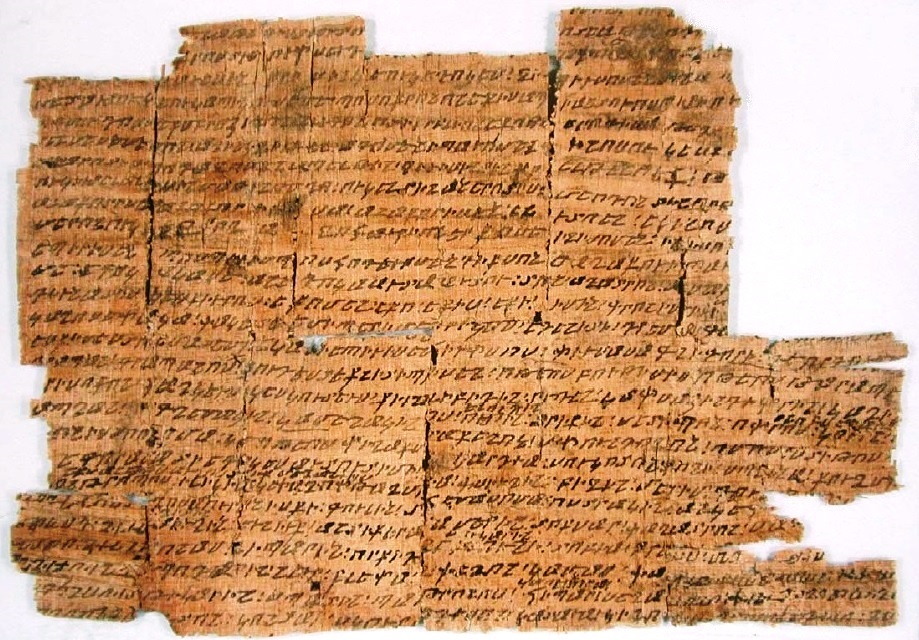
Or: Why my (probably) favourite historical document is a unique Armenian text without a word of Armenian. Centuries before the translation apps and pocketable phrasebooks of today, people who found themselves far from home made do with ink and papyrus. For reasons of pure linguistico-historical nerdery and joy, I’d like to introduce you to aContinue reading “The Armenian Who Learned Greek in Ancient Egypt”
Category Archives: Indo-European
Vltava, Sázava, Mumlava: A Mumble of Voices Almost Lost
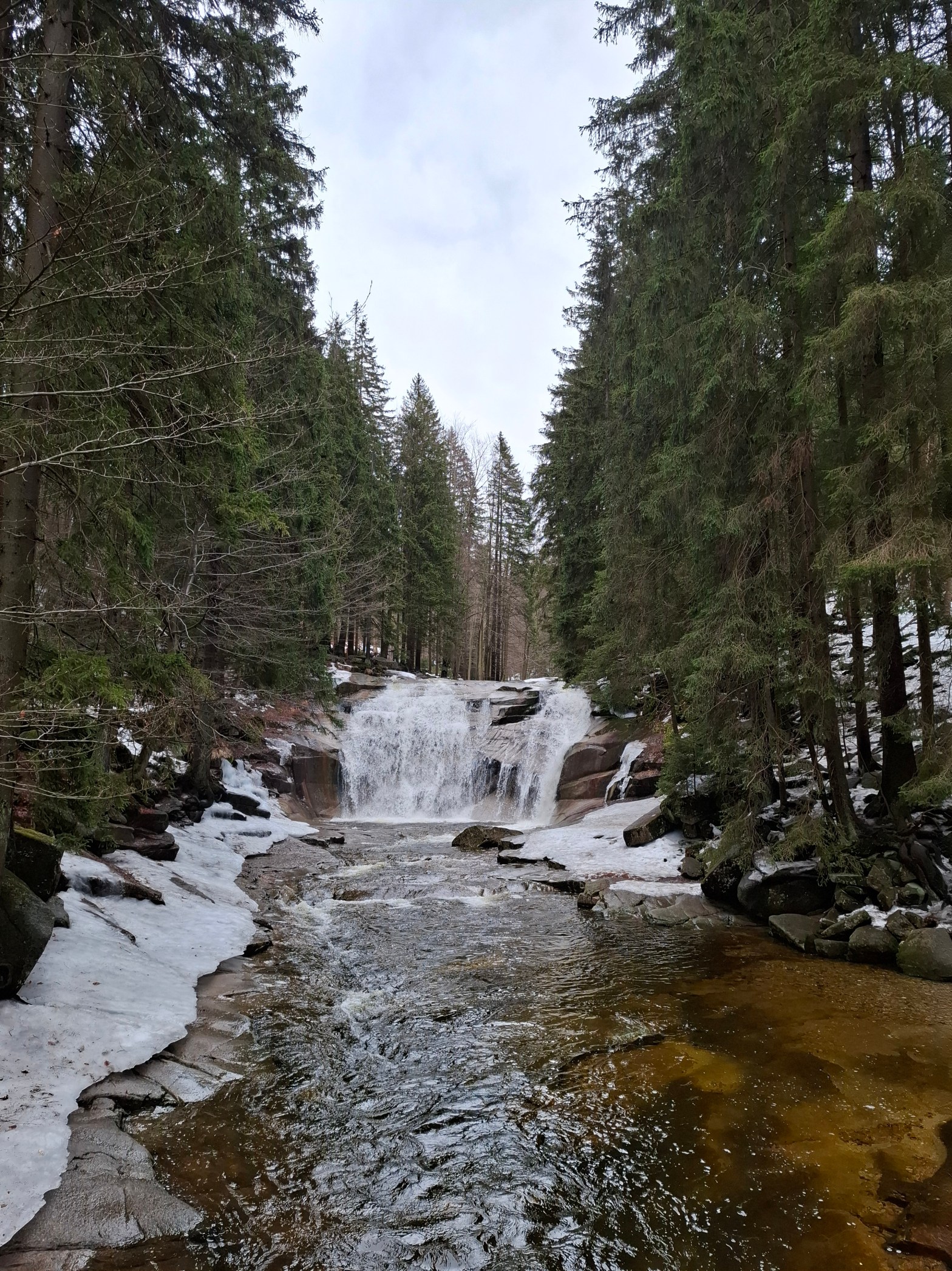
Local rivers, specifically just one bit of them, have had me reflecting on lost language and the flow of time again. No one will be surprised by this. I recently descended from the heights of an enjoyable weekend in Krkonoše, a very hilly national park in the Czech Republic. Tucked up between two angles ofContinue reading “Vltava, Sázava, Mumlava: A Mumble of Voices Almost Lost”
Monica, Erica, Rita, Tina: Why do so many women’s names end in A?
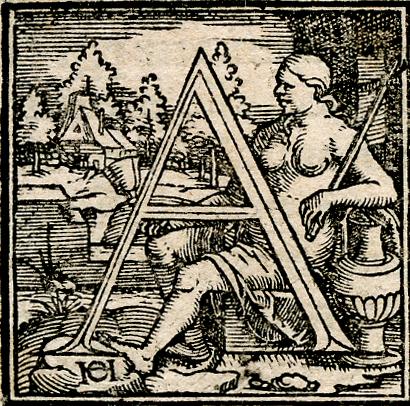
There’s a certain air of femininity around the letter A. For one reason, it brings a great number of modern female first names to a close. A sample of famous names, especially if skewed towards the West, will typically include a fair few examples. Among the female winners of a Nobel Prize, we find Claudia, Bertha,Continue reading “Monica, Erica, Rita, Tina: Why do so many women’s names end in A?”
A Love that Lasts Six Thousand Years
“… Love is not love Which alters when it alteration finds, Or bends with the remover to remove. O no! it is an ever-fixed mark That looks on tempests and is never shaken.” (William Shakespeare, Sonnet 116) February 14th has come round again, and love is in the air! ‘It was different in my day,’Continue reading “A Love that Lasts Six Thousand Years”
An Unexpected ‘Indian’ Language in the Middle East
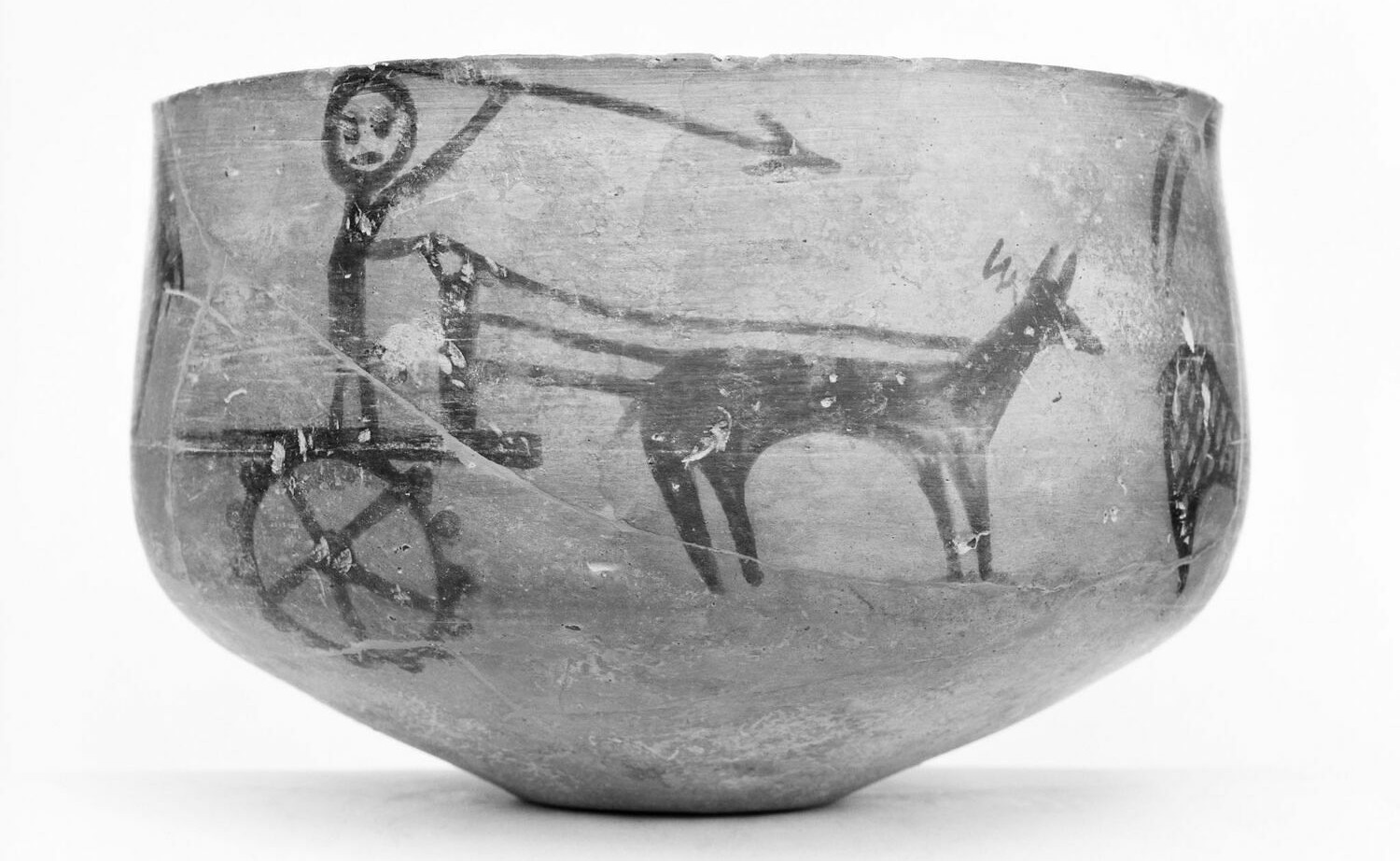
Delighted and motivated by the positive response to my recent article, Greek, the Asian and African Language, my mind has been occupied by an eagerness to share another example of historical languages turning up where we don’t expect them to be. That post and this one are united by an appreciation of how interconnected the ancientContinue reading “An Unexpected ‘Indian’ Language in the Middle East”
Greek, the Asian and African Language

Just as the borders of Europe are geographically, politically and socially fuzzy, so too are its linguistic edges. Whatever lines of demarcation we care to draw, the many flavours of speech to be heard in Europe flow over those lines like the air of which they’re made. Consequently, a label like ‘a European language’ isContinue reading “Greek, the Asian and African Language”
Cool Etymology: Chilled Jelly and Cold Gelato

In previous years, I’ve seized on the annual holiday of Christmas as inspiration for a December article. For this year, though, I fancy a foray into the weather conditions associated with that holiday: that is, the cold. Christmas imagery is inseparable from low temperatures, what with all its snow, reindeer, and jolly gentlemen in fur-linedContinue reading “Cool Etymology: Chilled Jelly and Cold Gelato”
Reflections of Trieste

Like an insufferable fin-de-siècle socialite, I’m writing this on my honeymoon, a three-stop holiday that naturally never once ventures outside the old borders of the Austrian Empire.¹ As any self-respecting new husband should, it’s giving me the time to reflect on the two dearest things in life: a beautiful wife, and language history. No otherContinue reading “Reflections of Trieste”
PIE was not SOV

Reading time: quite a while Having dedicated over four years of my life to the subject, I have one or two thoughts about the word order of Proto-Indo-European. Somebody somewhere had to have them. This reconstructed language – the ‘lost’ common ancestor proposed to explain the countless similarities across the Indo-European languages – has nowadaysContinue reading “PIE was not SOV”
New Article: ‘Wackernagel’s Law in Vedic and Old Irish’
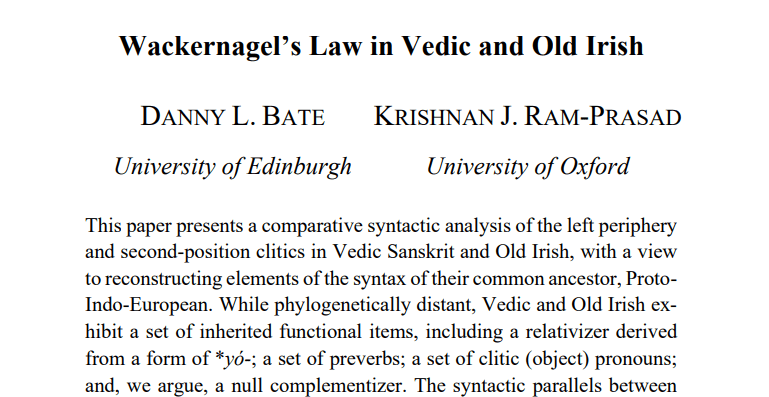
By a happy twist of fate, January 2025, just like January 2024, has allowed me to announce a new academic publication! This time, it’s Wackernagel’s Law in Vedic and Old Irish, a paper co-authored with my brilliant colleague and dear friend Krishnan Ram-Prasad. The paper has been included among the proceedings for the thirty-fourth annualContinue reading “New Article: ‘Wackernagel’s Law in Vedic and Old Irish’”
 Danny L. Bate