
How are painting and picture related English words? Why does Latin vincō ‘I win’ become vīcī in the past tense? How did the same Latin verb give English both convince and conviction? This blog post is my guide the wonderful world of the nasal infix, a linguistic phenomenon that comes in very handy for peopleContinue reading “Latin’s Nasal Infix: A How-to Guide”
Author Archives: dannylbate
Adieu to Covid

This is not a blog post about some obscure aspect of an ancient language – sorry folks. Its subject matter instead is Covid-19, specifically my experience of living with the disease. It will have to be filed under ‘Miscellaneous and Personal’. It is not (at least intentionally) a pity piece, some ballad of misery thatContinue reading “Adieu to Covid”
The Decline and Fall of the Latin Neuter

Reading time: 15 minutes There are many significant differences between Latin and its linguistic descendants, the Romance languages. One that stands out from the rest is grammatical gender. Latin has three genders for its nouns: masculine, feminine and neuter. However, in French, Spanish, Portuguese, Catalan, Italian and all the other many Romance varieties that lackContinue reading “The Decline and Fall of the Latin Neuter”
The High German Consonant Shift and How to Use It

If you already know English and are in the process of learning German, you may be struck by how similar words in the two languages can be. It can surprise novices that English sentences like ‘I have two cats and six books‘ or ‘it drinks water‘ are so close to their German counterparts ‘ich habeContinue reading “The High German Consonant Shift and How to Use It”
From English to Greek in Two Rules

Reading time: 10 minutes (Note: as usual, letters between /slashes/ refer to sounds, following the IPA, while an *asterisk denotes a reconstructed, prehistoric word.) English and Ancient Greek are distantly related languages that descend from a common ancestor – consequently, if you’re trying to learn one and already know the other, you can use theseContinue reading “From English to Greek in Two Rules”
The Un-mouthing of Sounds
This post is a brief introduction to the process of debuccalization, a sound change with the power to dispel confusion in various languages of Europe and beyond. With the help of some concrete examples taken from three languages, this is a concept that I believe might come in rather handy for language learners. As isContinue reading “The Un-mouthing of Sounds”
Re-Reduplication in La-Latin
In previous posts, I’ve written about the idea of stems and its importance for Latin. Simply put, the stem of a Latin noun, adjective or verb is an intermediate stage between the root (the meaningful part of the word) and the grammatical endings that make the word complete. In the second of the two piecesContinue reading “Re-Reduplication in La-Latin”
Latin Stems: Part II
Verbs and Verbal Stems A Recap In part one, I introduced at the idea of stems and how it works in Latin nouns and adjectives. We saw that Latin nouns and adjectives can be broken into three parts. root + stem vowel + case-number affix By “root”, we meet the meaningful part of any word,Continue reading “Latin Stems: Part II”
Latin Stems!

An Invaluable Tool for a Latinist’s Toolkit If there is one thing that I urge all Latin learners to get to grips with, it is the concept of stems. My passion for this topic is so great that I have structured my own Latin course around it, including and using it from the outset. IContinue reading “Latin Stems!”
Walloons, Wales and Cornish Walnuts: The Wonderful Word World of *walha-
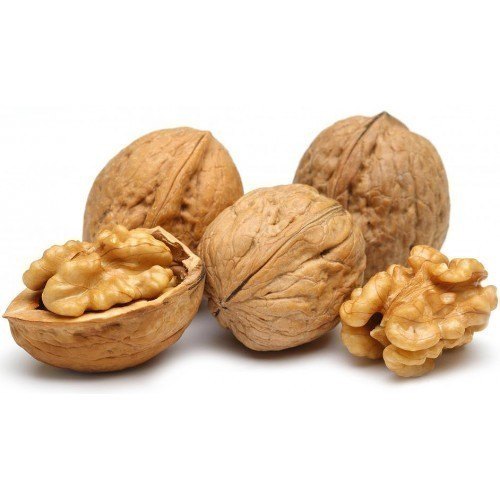
This article is an adaptation of one first written for the brilliant interdisciplinary magazine Porridge, which you can find out more about at porridgemagazine.com. Note that an asterisk * is used for historically undocumented and therefore hypothetical words. I’d like to tell you the tale of a headlong tumble down a rabbit hole of etymologyContinue reading “Walloons, Wales and Cornish Walnuts: The Wonderful Word World of *walha-“
 Danny L. Bate