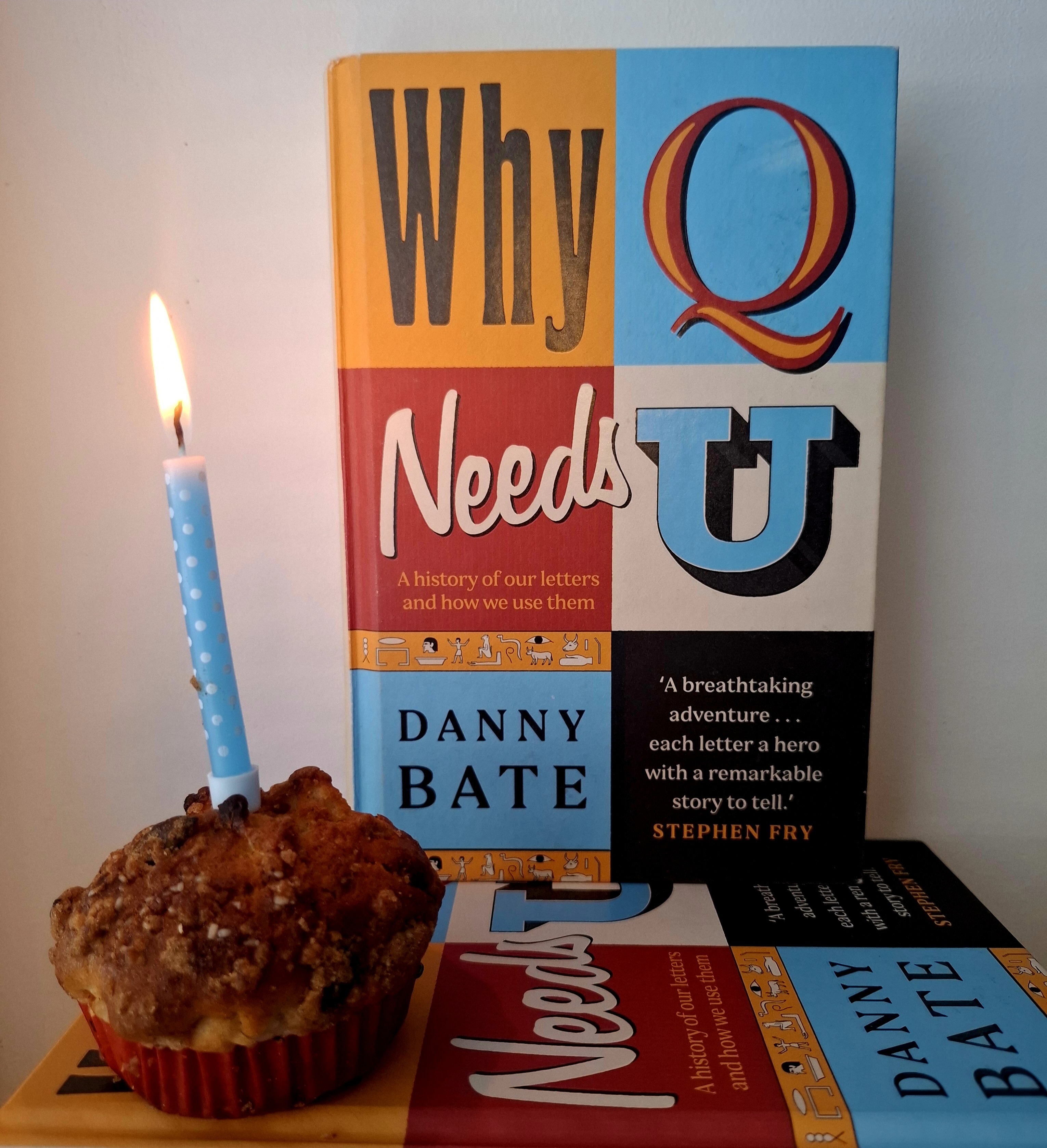
Recollections from an Author’s First Year
Though it pains me somewhat to acknowledge the fact, my début book, Why Q Needs U, was released into the wild one year ago. I’m certainly keen to celebrate the book’s first birthday, but also feel some reluctance at broadcasting this milestone, lest I fully fathom the passing of time, and accidentally alert bookshops to an interloper in the ‘New Non-fiction’ section.
The book’s official publication date in the UK was set for October 2nd 2025. Yet, on a hot October 1st spent running around central London, I quickly realised that publication dates are more like guidelines. In the morning, Why Q Needs U and I meet for real for the first time. In the afternoon, we then kept on meeting, as I trailed after my giddy agent to visit the mega bookshops of the metropolis.

Foyles on Charing Cross Road, Hatchards on Piccadilly, the Waterstoneses on Gower Street and Piccadilly: there they were, my fallible words, exposed to the elements and market forces. After seeing the altar-like table dedicated to WQNU in one Waterstones, I needed some cold water and a sit-down. It was all, as the dangerously overwhelmed Brit will say, ‘a bit much’.

Having now recovered and rehydrated, I recall that day with great fondness and gratitude. It was a darn good start to the journey of the book and its author.
To narrate the year since, I find my inner pen reaching for the phrase ‘it’s changed my life’. This, as well as spurning my commitment to the war on cliché, doesn’t satisfy my philosophical principles of pendantic precision when using language, for all choices and achievements change our lives. ‘Put my life on a different track’, ‘switched the points on my life’ and other railway-based metaphors seem more fitting ways to describe what Why Q Needs U has made possible for me.
There is a certain clout that comes with having a book out – not totally unreasonably, I think. While being a published author is by no means a guarantee of brilliance or even competence, it is at least a signal to interested parties that others, such publishing companies or literary agents, can confirm who you claim to be, and have backed you in time and money.
With new confidence, fairly or not, drawn from their support, I’ve felt socially able to put myself into contact with established authors, broadcasters and communciators, and to take up barely dreamed-of opportunities.

The half-hour of me on BBC Radio 4, strutting the stage at a history festival in deepest Wiltshire, and thanking an audience for coming to my TED talk in Bratislava remain peaks on an already high range of enjoyment.
The opportunities have also included those of a private arrangement, out of the public eye. Talking to other authors, off or on the record, is always nourishing. Speaking to high schools has been especially treasured, as was being welcomed into a new academic community: the dispersed company of scholars of writing. These geniuses, committed to understanding and lauding this human behaviour, have allowed me to keep learning and engaging with the mysteries of meaningful-mark making.
Appreciating all of the above is tinged with concern; it has all been so fluid, so contingent and serendipitous, so dependent on others’ enthusiasm and selfless endorsement. On my own, I would’ve made none of the events above happen. Instead, other people, often unprompted, have borne me and my writing in mind, and recommended me to further people in an expanding network of fortuitous connections.
Such a network is, I see now, the environment of the freelance writer, and to acknowledge this dependence is humbling. The newbie that I am, chances to be the endorser, rather than the endorsed, have been few in number – an imbalance I am eager to change.
The lightness of early October 2025 is put into relief by a subsequent shadow. For the first week, I was in the UK and excitedly kept busy by the demands of a launched book – little things like developing an author’s signature (note to new authors: best use one other than your banking signature). Publication day is like a collective shout into the void, as author, agent and publisher create enough noise to proclaim the birth of a book. Then falls silence, as you wait for the echo.
For me, as the nervous new author, that silence became too loud. Publishers’ attention naturally drifts to new projects, and the author can’t demand updates on how progress looks from their side. From sporadic messages and chats with booksellers, I gleaned that the book was going places and fledging successfully, and I desperately wanted to contribute to its next steps. But I had few buttons to press – an unknown name, with scarcely any contacts in the media, and no skill in self-made promotion on the happening platforms of the Internet. My geographical situation, torn between two countries, also did not help.
So, November to February found me in an occasionally interrupted funk of frustration, restlessly raring to stoke the enthusiasm for WQNU, but stuck on how exactly to go about that. When in the UK, I settled on visiting lots of bookshops to sign their copies; seeking and finding the book in stores from Bury St Edmunds to Brno has in no way got old. When back home in Prague, I emailed the world. The first tactic is great fun, as bookshops and booksellers are delightful, but it really burns through money. The second tactic reaps a meagre harvest. I should’ve occupied that period differently, but of course sentences containing should’ve are mostly pointless. Family and friends were a lifeline during those first months, ready to fly your flag and to let you know about it.

As rays of sunlight pierced the cloudlayer in February, and we gained surer signs of just how far the book had already reached, the whole situation started to look brighter. The gradual acceptance of the title of bestseller around that time was certainly thrilling. But it was expressions of enjoyment from worldwide readers, as well as invitations to future events, that warmed an author low in spirit, health and bank balance. It’s an eternal human good to tell creatives that you like what they made.
To conclude then, I can offer a word for new authors: you will be ‘just the author’. You’ll have a limited set of levers to pull, and pull them you should, but the reactions of readers are beyond your control. You cannot hurry the echo’s arrival. In the meantime, as my inevitably correct agent put it, it won’t be a matter of managing the book, but rather of managing yourself.
With thanks to you countless people who have supported the book, here’s to the next year of Why Q Needs U!
END.


Leave a Reply