
Reading time: 5-10 minutes
For this month, I’d like to highlight a phonological phenomenon that should be part of the conceptual toolkit of all etymology fans. It’s something that’s happened in the history of English, and in languages that have gone on to influence English. Awareness of this change can therefore clarify and connect all kinds of current English vocabulary. This is the linguistic phenomenon of epenthesis.
Its name deriving from the Ancient Greek verb epentíthēmi (‘I insert’), this is a seemingly straightforward process, in which a new sound is added into a word.
It’s often the knock-on effect of previous changes, such as the loss of an unstressed vowel. That loss might bring two previously separate consonants together, resulting in an awkward sequence of sounds that go against what’s permissible or comfortable in the language. In such cases, epenthesis comes to our tongues’ rescue. By inserting an epenthetic (or ‘euphonic’) vowel or consonant, the cluster is broken up and phonological order is restored.
This is all abstract so far, so what’s the relevance for English etymology? English, being a spoken language with a long historical record, bears witness to many cases of epenthesis, and recognising it in a word allows us to make connections to other words and other languages. To illustrate all this, this post concentrates on epenthetic consonants, since I think these more greatly obscure etymological links to be recognised and enjoyed.
Muddle English
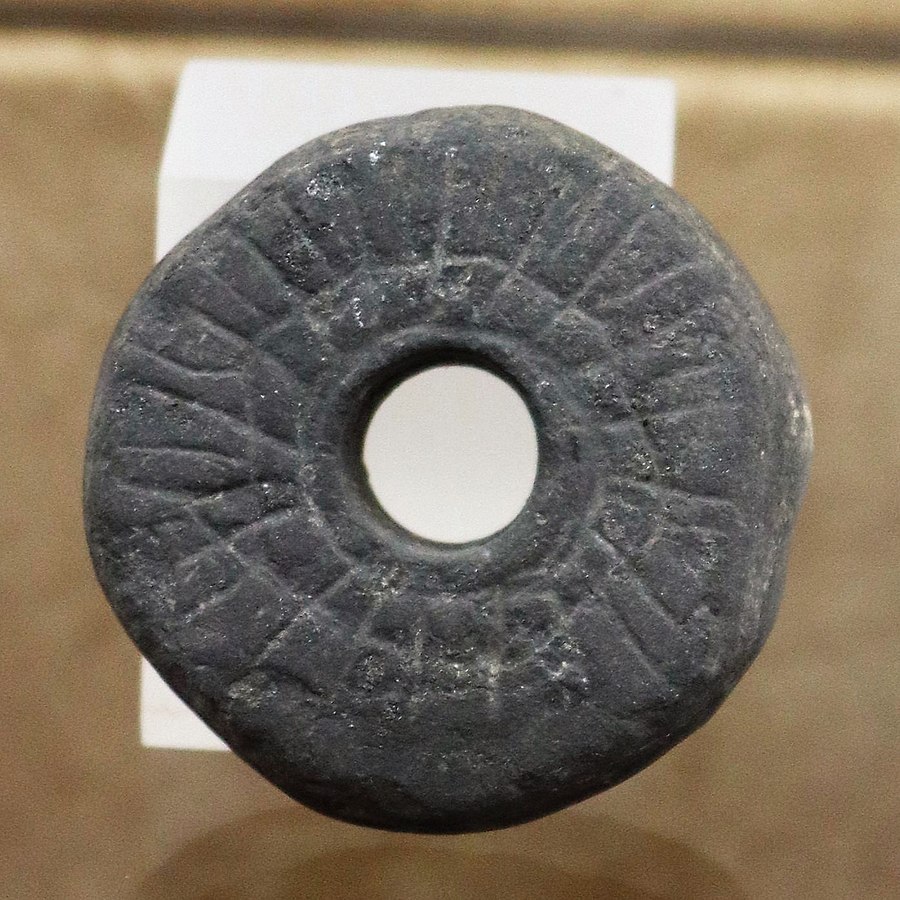
The Old English word for ‘thumb’ is þūma. The tiny tool used on the thumb while sewing is a þȳmel. The latter is recognisably the source of modern thimble, yet the word gained an extra B over the course of the medieval era.
Other words show this too; the same thing has happened with bramble (from brǣmel) and nimble (from numol). Meanwhile, from the Old English word þunor comes thunder, just as a spindle goes back to spinel. In the latter two, it was instead a D that got inserted by Middle English speakers.
This is epenthesis, and it wasn’t random; it occurred in specific contexts. In all five words above, the additional consonant was squeezed in between a nasal sound (/m/ or /n/) and a liquid sound (/l/ or /r/), following the loss of a vowel. Clearly there was something awkward about having these two types of sound side by side.
Languages can be fussy about how they build their syllables. In the absence of a second vowel, the syllabic structure of brǣmel might have been /bræ.ml̩/. In this, the second syllable would contain two equally sonorous sounds. It’d be much better, and more in keeping with the principles of sonority, to add in a plosive consonant, and thus redistribute the two sounds across the two syllables. This resulted in /bræm.bl̩/. Alternatively, the reason may have been aerodynamic, with the epenthetic sounds emerging naturally as speakers closed the velum and switched from a nasal to a non-nasal sound.
Whyever it happened, the extra consonant emerged from the original sounds of the word. More specifically, it was determined by those sounds. The choice between B and D in thimble, bramble, thunder and spindle depends on the features of the preceding nasal consonant. The /m/ in thimble and bramble is a labial sound, made with the lips, and so is the inserted /b/. The /n/ in thunder and spindle is an alveolar sound, and so is /d/. This epenthesis of consonants in Middle English was homorganic, made with the same parts of the mouth.
For the etymologist, these extra sounds are something to substract when tracing the origins of such words. That is to say, the /b/ consonant of bramble was not present in the ancient root of the word, and so may not be present in other offspring from that root. In the case of bramble, it’s not there in the related word broom. Ignoring the B in nimble presents a clear route to the common German verb nehmen ‘to take’.
Likewise, the D in spindle isn’t a part of the verb spin. What’s more, the natural phenomenon of thunder was personified and known to Norse speakers as the god Þórr – that is, Thor. We can better appreciate the picture here if we remove the D of thunder from the equation, connecting þunor, Thor and indeed Thursday.
L’épenthèse
That would be all there is to say about Middle English epenthesis in English etymology – a footnote to explain a handful of words – were it not for the fact that the same process had already had a great impact on the vocabulary of early medieval French. This was vocabulary that would later be adopted into medieval English.
By one reckoning (Walker 1978), the insertion of /b/ and /d/ under similar conditions occurred in the emerging French language at an early point, around the 8th and 9th centuries AD. It likewise split up uncomfortable clusters of consonants, which were themselves products of the earlier loss of vowels in the penultimate syllables of words.
The Latin word camera is of course the direct origin of English camera, but its meaning for the Romans wasn’t anything photographic, but rather a kind of room. After later losing its second vowel, *cam’ra would gain an epenthetic /b/. This is how French today has chambre ‘room’, and is the source of chamber in English.
Similarly, the Latin noun numerus directly gives us the adjective numeral, but also indirectly, a Late Latin form like *num’ru would travel through Old French, undergo epenthesis, and result in English number.
Epenthesis and the different routes of Latin words into the English lexicon can help us to connect simultaneous to ensemble, and humility to humble. Elsewhere in the Romance languages, Spanish hombre contains an added /b/ to improve on an older form *omre, itself from *omne, ultimately from Latin hominem ‘person’.
Meanwhile, the insertion of /d/ is part of the journey from Latin genus to English gender, or from the Latin adjective tener to English tender. English gets the verb pulverise from the Latin word pulvis ‘dust’. Building on the oblique stem, a new feminine *pulvera was coined in Late Latin. This then became *polra, in which epenthesis would break up the liquid cluster /lr/. Hence, we have powder.
Old French also added in other consonants in other contexts. A voiceless /t/ consonsant inserted itself in a sequence of /sr/. For example, antecessor in Latin is literally a ‘before-goer’. Applied to genealogy, *antecess’re is recognsibly the origin of ancestor. This may also be why something’s reason for existing is a raison d’être. Latin esse ‘to be’ became essere and presumably then *ess’re. This would eventually lead to the Modern French verb for ‘to be’, être.
This is just a glimpse into the world of epenthesis, focused specifically on etymologically helpful examples in the English lexicon, from two historical periods. There is so much more that could be said. For one thing, epenthesis is by no means a thing of the past! I dare say it’s an inevitable phenomenon in all spoken languages, if the conditions are right, although it’s another matter whether an epenthetic sound comes to be ‘lexicalised’ and accepted as the norm in sound and spelling. I pronounce and spell empty with a P that’s absent from Old English ǣmettiġ, but I will also spell the past tense of dream as dreamed, yet pronounce it ‘drempt‘.
With all that said, I’m off for a cup of tea and a nice syrup–waffle – to the Dutch, a stroopwafel.
END
References
- Czaplicki, B. (2010). Emergent stops in English and in Polish: Against syllable-based accounts. Poznań Studies in Contemporary Linguistics, 46(2), 177-191.
- Dumas, D. (1993). Old French and Constraints on Consonant Epenthesis. Historical Linguistics 1991 : Papers from the 10th International Conference on Historical Linguistics, Amsterdam, August 12–16, 1991. 99-110. John Benjamins Publishing Company.
- Kerkhof, P. A. (2018). Language, law and loanwords in early medieval Gaul. Studies on Romance—Germanic Language Contact and Gallo-Romance Phonology.
- Minkova, D. (2013). Historical phonology of English. Edinburgh University Press.
- Walker, D. C. (1978). Epenthesis in Old French. Canadian Journal of Linguistics / Revue canadienne de linguistique, 23:66-83.
Cover image from here.
 Danny L. Bate
Excellent, once aga
LikeLike
Cool! Thank you. This makes me wonder if the bowls of letters like your “b,” “d,” and “p” , for instance, as “bowls”, that is, as parts of a letter enclosing a space, were somehow representative???
LikeLike
Yiddish does this often in name derivation: the diminutive suffix -l often gets an epenthetic consonant before it. So Sheyne (cf Schöne) > Sheyndel, Kreyne > Kreyndel, etc.
LikeLiked by 1 person