
Reading time: 15-20 minutes Passing a milestone on a long journey, be it a metaphorical or a literal one, is always a moment for reflection. Recently, after fifteen months, I crawled over the finish line of a large part of my PhD project, and promptly ran off to the pub. The morning after, I awokeContinue reading “(Hopefully) Halfway to Doctorhood”
Category Archives: Indo-European
Digging Old Irish
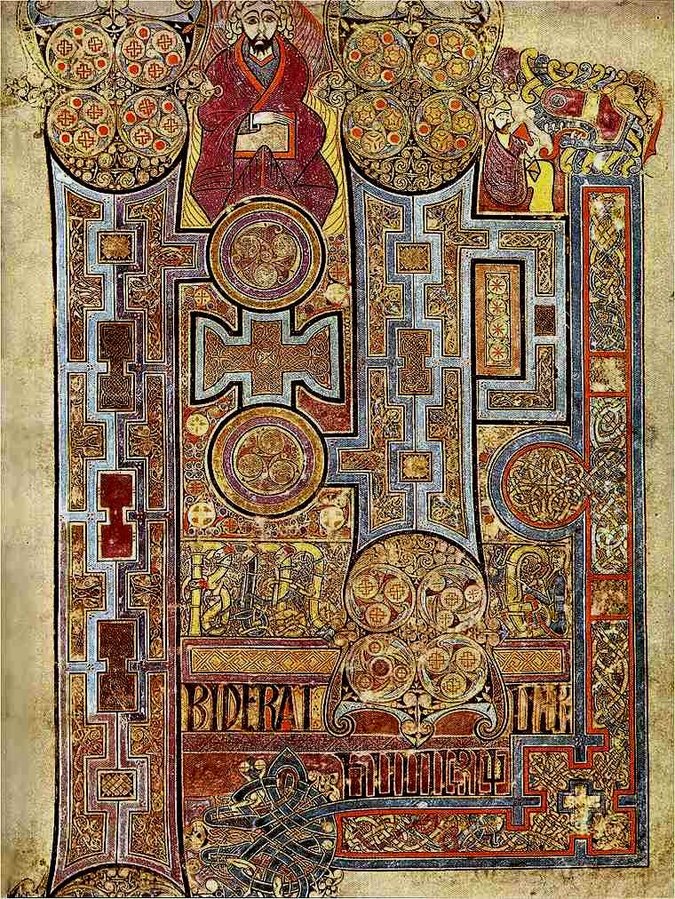
Reading time: 15-20 minutes Old Irish has a bit of a bad reputation. This historical form of the Irish language, dated to between c. 600 AD and c. 900 AD, is a challenge for learners, even for those who already know some Modern Irish. Its systems of spelling, sounds, word order and grammar are veryContinue reading “Digging Old Irish”
Getting to Grips with Greek: Achieving the Alphabet

Reading time: 10 minutes Since antiquity, the Ancient Greek language has held a certain prestige that extends far beyond its autochthonous corner of the Mediterranean. Its influence has been multi-faceted; Greek vocabulary today turns up in so many different spheres of so many different languages, such as in terminology for medicine, for chemistry, for engineering,Continue reading “Getting to Grips with Greek: Achieving the Alphabet”
Of Mouses and Mans? — The Origins of English’s Vowel-Swapping Nouns and Verbs

Introduction: Nouns, Verbs and Variable Vowels In present-day English, the plural of mouse is usually mice, and one man plus another equals two men. While most English nouns are made plural simply by adding -s, making one cat into multiple cats, there is a sizeable minority that become plural through the process that we seeContinue reading “Of Mouses and Mans? — The Origins of English’s Vowel-Swapping Nouns and Verbs”
From English to Greek in Two Rules

Reading time: 10 minutes (Note: as usual, letters between /slashes/ refer to sounds, following the IPA, while an *asterisk denotes a reconstructed, prehistoric word.) English and Ancient Greek are distantly related languages that descend from a common ancestor – consequently, if you’re trying to learn one and already know the other, you can use theseContinue reading “From English to Greek in Two Rules”
The Un-mouthing of Sounds
This post is a brief introduction to the process of debuccalization, a sound change with the power to dispel confusion in various languages of Europe and beyond. With the help of some concrete examples taken from three languages, this is a concept that I believe might come in rather handy for language learners. As isContinue reading “The Un-mouthing of Sounds”
The Neuter Gender – A Very Useful Rule!
A Bit of Background The Indo-European family is a big group of languages that are spoken all over the world. There’s a good chance that, if you are learning a foreign language at the moment, it belongs to this family. Indo-European languages are united in their descent from a single, prehistoric language, which we callContinue reading “The Neuter Gender – A Very Useful Rule!”
 Danny L. Bate